As I thought more this morning about my previous post, a bit of a summary occurred to me.
(You always think of what you should have said, after you've said it, right?)
So here goes:
A Good Reading Experience is a partnership. It's very much like falling in love with another person, and it requires two things:
a) The right stimulus
b) The right response
That's why many book reviews fall short of being helpful.
"This book was great!" Doesn't tell me anything, because I don't know you, your values, your personality, and your background.
We often dissect the qualities of a given story, but we rarely reflect on the other side... the qualities of the reader who is engaging the text.
A "Good read" takes two.
Sunday, January 6, 2013

Monday, December 31, 2012
No Such Thing as a Good Book
I just finished reading Henry James' "Turn of the Screw."
Re-reading, actually, because I first encountered the story during my college years.
And I'm now reading "The Three Musketeers," by Alexandre Dumas.
These two stories--and people's reactions to them--have reminded me of an important truth: There's no such thing as a good book.
Pick any book you loved. I mean loved. And go to Amazon or Goodreads and check the reviews. You'll be shocked to find messages there from people living on a different planet. People who hated this very same book you loved...or at least felt indifferent to its charms.
How can this be? Why can't they see what you see?
Because books are (like any art work) nothing more than Projective Tests. More recently known as Free-Response Measures, Projective tests in psychology are ambiguous stimuli that tell us far more about the person than they do about the object.
Is there something wrong with people who don't appreciate science fiction or fantasy? Or Romance? Or Westerns?
No.
But certain types of people will respond to those stimuli differently.
We get tied in knots discussing the relative "merits" of certain kinds of fiction...or of certain specific works...and miss the point entirely.
We debate and discuss and sometimes argue over stories, as if the story itself held an intrinsic quality of "goodness" or "badness."
When in fact, encountering a story is like encountering another person. You will "click" with some people, and not with others. And if you're paying attention, this degree of "fit" tells you most of all about yourself.
What are some of the things about you that determine whether or not you'll appreciate a particular story?
1) Age. Ever read a book twice, at different ages? Chances are, it means something different to you. "Turn of the Screw" created a different (more intense) reaction in me at age 48 than it did when I was twenty-something.
2) Intellect. I've written on this before, and it's a can-of-worms topic. But (Reader's Digest version): Intellect is essentially the capacity to deal with complexity. Complex words, complex sentences, complex plots can either be a playground of the imagination...or a frustrating block.
3) Aspects of Personality. This could be a book-length discourse; but for now, I'll mention just one element: People tend to lean (at least a little) towards either of two poles...
Analytical/Technical
vs
Social/Relational
And these "bents" determine some of our preferences in stories.
Analytics (Thinkers, introspectors, imaginatives) tend to have a greater appreciation for the fantastical...for sci fi and fantasy and bizarre worlds and "out there" possibilities. They are explorers of the mind...and they enjoy speculating on "what could be." They like to chew over their stories, and break them down and savor the richness of inner worlds.
Socials (Relationship-focused, extroverts) are less likely to be attracted to what they perceive as "weird" stuff. They want to vicariously feel the surge and pull of emotions that come with the territory of human relationships.
Neither of these tendencies are absolute...like two discrete sides of a coin. Most personalities are a blend of these two, and fall somewhere along a continuum. But individuals do tend to favor one side above the other in the overall coloration of their personalities.
When you tell me about a book you loved (or hated)...I'm learning more about you than I am about the book.
Re-reading, actually, because I first encountered the story during my college years.
And I'm now reading "The Three Musketeers," by Alexandre Dumas.
These two stories--and people's reactions to them--have reminded me of an important truth: There's no such thing as a good book.
Pick any book you loved. I mean loved. And go to Amazon or Goodreads and check the reviews. You'll be shocked to find messages there from people living on a different planet. People who hated this very same book you loved...or at least felt indifferent to its charms.
How can this be? Why can't they see what you see?
Because books are (like any art work) nothing more than Projective Tests. More recently known as Free-Response Measures, Projective tests in psychology are ambiguous stimuli that tell us far more about the person than they do about the object.
Is there something wrong with people who don't appreciate science fiction or fantasy? Or Romance? Or Westerns?
No.
But certain types of people will respond to those stimuli differently.
We get tied in knots discussing the relative "merits" of certain kinds of fiction...or of certain specific works...and miss the point entirely.
We debate and discuss and sometimes argue over stories, as if the story itself held an intrinsic quality of "goodness" or "badness."
When in fact, encountering a story is like encountering another person. You will "click" with some people, and not with others. And if you're paying attention, this degree of "fit" tells you most of all about yourself.
What are some of the things about you that determine whether or not you'll appreciate a particular story?
1) Age. Ever read a book twice, at different ages? Chances are, it means something different to you. "Turn of the Screw" created a different (more intense) reaction in me at age 48 than it did when I was twenty-something.
2) Intellect. I've written on this before, and it's a can-of-worms topic. But (Reader's Digest version): Intellect is essentially the capacity to deal with complexity. Complex words, complex sentences, complex plots can either be a playground of the imagination...or a frustrating block.
3) Aspects of Personality. This could be a book-length discourse; but for now, I'll mention just one element: People tend to lean (at least a little) towards either of two poles...
Analytical/Technical
vs
Social/Relational
And these "bents" determine some of our preferences in stories.
Analytics (Thinkers, introspectors, imaginatives) tend to have a greater appreciation for the fantastical...for sci fi and fantasy and bizarre worlds and "out there" possibilities. They are explorers of the mind...and they enjoy speculating on "what could be." They like to chew over their stories, and break them down and savor the richness of inner worlds.
Socials (Relationship-focused, extroverts) are less likely to be attracted to what they perceive as "weird" stuff. They want to vicariously feel the surge and pull of emotions that come with the territory of human relationships.
Neither of these tendencies are absolute...like two discrete sides of a coin. Most personalities are a blend of these two, and fall somewhere along a continuum. But individuals do tend to favor one side above the other in the overall coloration of their personalities.
When you tell me about a book you loved (or hated)...I'm learning more about you than I am about the book.
Friday, November 23, 2012
We Dit It!

Saturday, November 17th we celebrated the release of Primary Source at the Marrowbone Public Library.
Written World Communications editor Rowena Kuo and her wonderful family traveled down from Chicago to be with us, as we greeted 52 people, enjoyed the refreshments, and laughed together.
Ro's youngest daughter, Evie took time to peruse the work of competing authors:

Meanwhile, I signed copies of mine:

During the festivities, Lesa told me the story of going to the store to pick up the decorated cake she ordered. The bakery handed it to her, she glanced at it, and took it to the checkout line. While waiting to pay, she decided to check it more thoroughly, and lifted the box lid. The cake read:
Congratulations, Alan. You Dit It!
Back to the bakery for a quick fix...Even with baked goods, there's always editing to do!
It was a great celebration with family & friends...and a time to acknowledge that I didn't do it alone. Rowena and the team at Written World Communications, my family, and supporters all made it possible:
We Dit It!

Sunday, September 23, 2012
25 / 12

Our daughter was born on September 1st, 1992. Two weeks late. And while those last two weeks of waiting seemed longer than the whole preceding nine months, there was one silver lining:
She was born on my birthday.
It was the nicest birthday gift I ever received, and a wonderful convergence of two celebrations.
Twenty years later, the month of September turns out to be another convergence worth celebrating.
September 5th marked our 25th wedding anniversary. And, after 12 years of hard work, late September will see the release of my novel Primary Source.
The marriage has been easy...twenty five years with my best friend, and while we've walked through all the usual ups and downs of life, I can't imagine a better partner.
The dream of publishing a novel...not so easy. Lots of ups and downs there, too... But unlike the marriage, there have been plenty of times when the temptation to quit was almost overwhelming.
November is still a ways off, but this has been a month of grateful Thanksgiving.
Maybe by our 50th anniversary, I'll have two books published! If not, as long as I have her, I'll be content...
Monday, September 3, 2012
An Opera in Three Acts
With Primary Source moving along towards publication (the team is working on layouts & typesetting, now), I thought it would be fun to dissect a few elements of the book...and maybe answer a few questions before anyone has a chance to ask.
To start with: Why are the three major parts of Primary Source named after operas?
The main character, Malorie DeMarco, is a fourth-generation Italian American. Growing up, she absorbed the love of opera from her Grandfather...and it's still a part of her life, much to the bewilderment of her roommate, Paige.
While opera themes don't play a major role in the story, I thought naming the three major sections after famous librettos might be a good way to reinforce the impact that opera had on Malorie's life...as well as providing hints of foreshadowing.
Part One: A Masked Ball (Verdi)
In the first section, Malorie struggles to make sense of confused identities...she's never quite sure who's who, but she knows she's in danger.
In Verdi's opera, a masked ball covers the identity of a political assassin.
Part Two: The Italian Girl in Algiers (Rossini)
In the second part of the novel, Malorie takes a journey away from her hometown of St. Louis, in search of answers.
In Rossini's opera, a spunky, clever Italian girl travels away from home on a search for her love.
Part Three: The Force of Destiny (Verdi, again)
As you would expect, Part Three brings everything together in the climax, and Malorie is forced into decisions that affect her destiny.
Verdi's opera has been described as "a sprawling concoction of disguises, fortune tellers, and vows of revenge." That seemed as good a description of the third section of the novel as any...
To start with: Why are the three major parts of Primary Source named after operas?
The main character, Malorie DeMarco, is a fourth-generation Italian American. Growing up, she absorbed the love of opera from her Grandfather...and it's still a part of her life, much to the bewilderment of her roommate, Paige.
While opera themes don't play a major role in the story, I thought naming the three major sections after famous librettos might be a good way to reinforce the impact that opera had on Malorie's life...as well as providing hints of foreshadowing.
Part One: A Masked Ball (Verdi)
In the first section, Malorie struggles to make sense of confused identities...she's never quite sure who's who, but she knows she's in danger.
In Verdi's opera, a masked ball covers the identity of a political assassin.
Part Two: The Italian Girl in Algiers (Rossini)
In the second part of the novel, Malorie takes a journey away from her hometown of St. Louis, in search of answers.
In Rossini's opera, a spunky, clever Italian girl travels away from home on a search for her love.
Part Three: The Force of Destiny (Verdi, again)
As you would expect, Part Three brings everything together in the climax, and Malorie is forced into decisions that affect her destiny.
Verdi's opera has been described as "a sprawling concoction of disguises, fortune tellers, and vows of revenge." That seemed as good a description of the third section of the novel as any...
Saturday, August 4, 2012
"Sure, I'm Sure."
My son and I have a running joke, based on an old Bloom County cartoon.
In it, the brainy, budding scientist Oliver hacks into the computer system of the Soviet newspaper "Pravda," and creates a false headline. When his friend Milo asks if Oliver got the translation from English to Russian correct, Oliver sounds confident...albeit with slight reservations.
"Sure I'm sure. I'm pretty sure."
Of course, his confidence was misplaced, leading to humorous results and confused Russians.
So anytime I ask my son, "Are you sure?" he automatically responds with the tag line.
Confidence is a strange paradox.
It allows us to take action; to move forward and dare things. A football team that believes in itself plays up to (and maybe beyond) it's capabilities.
As I write, the 2012 London Olympics are underway, and you often hear commentators discussing the confidence (or lack thereof) that athletes display.
Without confidence, we're uncertain about our direction. Tentative. We may even quit in discouragement. Or not even try.
Confidence is good.
Except when it's not.
For all its positive qualities, confidence has its dark side.
Most of us, like Oliver, tend to be more confident than the facts warrant. Studies done in a number of fields (athletic performance, chess skills, intelligence, supervisory prowess, decision-making capability, etc) suggest that human beings tend to consistently overrate their own skills/abilities.
This overconfidence factor seems particularly strong at amateur levels of activity. For example, studies of serious chess players show that both beginning and advanced players rate themselves as having higher levels of skill than is actually the case. However, the gap between self-judged ability and actual ability is wider for the beginning players.
More advanced players are a little more realistic about their true level of acumen, though they still display what psychologists term a "self-serving bias." (learn more)
This helps explains why the vast majority of drivers feel they are better drivers than other people. We can't all be better than the next guy...Yet we believe we are.
It's one thing if you feel you're a better tennis player than you actually are...the only thing liable to get hurt is your pride.
But what about people in positions of power who are confident that an oil rig is safe? Or confident that the housing bubble will never burst? Or confident that a little ice on the wings of that airplane won't be a problem?
Compounding the issue of overconfidence is the fact that people tend to be attracted to, and impressed by, confidence in others.
On the whole, we praise, applaud, and look up to confident people. And we are more likely to be persuaded by them.
Even when they are dead wrong.
This creates a culture...in politics, in business, in academic debate (can you say: "global warming"?) where it is more important to appear confident than to be factually correct.
The term "con man" comes from the word "confidence".... getting people to believe something that isn't true (for money, or status) used to be called "a confidence game." So con men and impostors can pull of audacious feats by acting with boldness and certainty.
You see, when people act like they know what they're doing...we tend to believe them. Whether or not it's actually true.
Therein lie the seeds of a lot of woe...
Would you rather be treated by a doctor who seems unsure of herself...tentative and always checking her facts in a book? Or by a doctor who swiftly and incisively assures you of what's wrong and how to fix it?
Studies show we intuitively place more trust in doctors who appear certain of their own diagnoses, and who speak confidently. Even though the doctor who double-checks her facts and second-guesses herself may be safer for our health.
It's not an easy paradox to resolve....but it's wise to consider both sides:
Confidence based on proven ability is healthy and productive.
Confidence based on smoke & mirrors can have terrible consequences.
In it, the brainy, budding scientist Oliver hacks into the computer system of the Soviet newspaper "Pravda," and creates a false headline. When his friend Milo asks if Oliver got the translation from English to Russian correct, Oliver sounds confident...albeit with slight reservations.
"Sure I'm sure. I'm pretty sure."
Of course, his confidence was misplaced, leading to humorous results and confused Russians.
So anytime I ask my son, "Are you sure?" he automatically responds with the tag line.
Confidence is a strange paradox.
It allows us to take action; to move forward and dare things. A football team that believes in itself plays up to (and maybe beyond) it's capabilities.
As I write, the 2012 London Olympics are underway, and you often hear commentators discussing the confidence (or lack thereof) that athletes display.
Without confidence, we're uncertain about our direction. Tentative. We may even quit in discouragement. Or not even try.
Confidence is good.
Except when it's not.
For all its positive qualities, confidence has its dark side.
Most of us, like Oliver, tend to be more confident than the facts warrant. Studies done in a number of fields (athletic performance, chess skills, intelligence, supervisory prowess, decision-making capability, etc) suggest that human beings tend to consistently overrate their own skills/abilities.
This overconfidence factor seems particularly strong at amateur levels of activity. For example, studies of serious chess players show that both beginning and advanced players rate themselves as having higher levels of skill than is actually the case. However, the gap between self-judged ability and actual ability is wider for the beginning players.
More advanced players are a little more realistic about their true level of acumen, though they still display what psychologists term a "self-serving bias." (learn more)
This helps explains why the vast majority of drivers feel they are better drivers than other people. We can't all be better than the next guy...Yet we believe we are.
It's one thing if you feel you're a better tennis player than you actually are...the only thing liable to get hurt is your pride.
But what about people in positions of power who are confident that an oil rig is safe? Or confident that the housing bubble will never burst? Or confident that a little ice on the wings of that airplane won't be a problem?
Compounding the issue of overconfidence is the fact that people tend to be attracted to, and impressed by, confidence in others.
On the whole, we praise, applaud, and look up to confident people. And we are more likely to be persuaded by them.
Even when they are dead wrong.
This creates a culture...in politics, in business, in academic debate (can you say: "global warming"?) where it is more important to appear confident than to be factually correct.
The term "con man" comes from the word "confidence".... getting people to believe something that isn't true (for money, or status) used to be called "a confidence game." So con men and impostors can pull of audacious feats by acting with boldness and certainty.
You see, when people act like they know what they're doing...we tend to believe them. Whether or not it's actually true.
Therein lie the seeds of a lot of woe...
Would you rather be treated by a doctor who seems unsure of herself...tentative and always checking her facts in a book? Or by a doctor who swiftly and incisively assures you of what's wrong and how to fix it?
Studies show we intuitively place more trust in doctors who appear certain of their own diagnoses, and who speak confidently. Even though the doctor who double-checks her facts and second-guesses herself may be safer for our health.
It's not an easy paradox to resolve....but it's wise to consider both sides:
Confidence based on proven ability is healthy and productive.
Confidence based on smoke & mirrors can have terrible consequences.
Sunday, July 22, 2012
Another Milestone
This past week marks another huge milestone in the writing journey...
My editor and I completed the final changes to Primary Source, and she's sending it out for typesetting.
Mostly, it feels weird... To suddenly have no more edits. To realize that all that work is done. I feel sort of displaced.
But it's a good feeling. Like Frodo, with the help of so many, I finished what I set out to accomplish. And, like Frodo, I've changed along the journey. Grown a bit wiser, I hope.
I hope it connects with a few readers, of course. Like Nichole Nordeman sings, "I don't mind if you've got something nice to say about me...." But there's a lot more to it, than that.
If my words challenge or inspire one person, the way I've been challenged and inspired over the years by well-written fiction, then every ounce of effort that went into Primary Source will have been worth it.
Looking forward to whatever comes next...
My editor and I completed the final changes to Primary Source, and she's sending it out for typesetting.
Mostly, it feels weird... To suddenly have no more edits. To realize that all that work is done. I feel sort of displaced.
But it's a good feeling. Like Frodo, with the help of so many, I finished what I set out to accomplish. And, like Frodo, I've changed along the journey. Grown a bit wiser, I hope.
I hope it connects with a few readers, of course. Like Nichole Nordeman sings, "I don't mind if you've got something nice to say about me...." But there's a lot more to it, than that.
If my words challenge or inspire one person, the way I've been challenged and inspired over the years by well-written fiction, then every ounce of effort that went into Primary Source will have been worth it.
Looking forward to whatever comes next...
Saturday, April 14, 2012
Confessions of a Commenter
Can I just say it?
I enjoy commenting on other people's blogs more than I enjoy posting on my own.
I'm pretty sure that's a politically incorrect statement, like admitting that you're not really into Thomas Kinkade paintings, but it's honest, nevertheless.
Here are a few reasons why it's true:
1) I like my commenting "voice." When I respond to an ongoing discussion on someone's blog, my words usually sound like me. Like I was sitting in a room with one or two people, having a thoughtful interchange. When I write a blog post, it usually sounds like someone I don't know. Occasionally I have achieved a post that sounds natural, but this hasn't happened often during the time frame I've experimented with blogging.
2) Good posts deserve comments. People with far more blogging talent than I are out there spending the time and effort to put their thoughts into eloquent words. When I read a well-written post, I feel compelled to give that person an "attaboy" or "attagirl" and show appreciation for their work. No one wants to post their best thoughts, and hear "crickets" in return...so I enjoy making some bloggers day by responding.
3) I hate the forced nature of good blog writing. I get the fact that it's important to blog regularly if you want to attract and retain an audience. I just can't do it (no surprise, if you check the archives). I'm more of a "When I have something to say, I'll say it" person. Which leads me to...
4) I love commenting because there's no set schedule. I have a handful of blogs that I visit fairly regularly (usually 3 or 4 times a week). If there's a lively discussion going on about a topic I care something about, I'll toss in my two cents. But if the current topics don't catch my interest, or if someone else has already said what I would have said, then I stay silent.
5) I'm very critical of my own blog ideas. One of my pet peeves is the repetitive nature of blog topics. It's a rare blogger that has the gift for writing engaging and fresh content. A large percentage of what clogs up the blog-waves is rehashed and rewarmed. And I tend to draft a post, look at it critically, and go: meh. So I don't post it.
God bless the talented bloggers! Look for me in the comment section...
I enjoy commenting on other people's blogs more than I enjoy posting on my own.
I'm pretty sure that's a politically incorrect statement, like admitting that you're not really into Thomas Kinkade paintings, but it's honest, nevertheless.
Here are a few reasons why it's true:
1) I like my commenting "voice." When I respond to an ongoing discussion on someone's blog, my words usually sound like me. Like I was sitting in a room with one or two people, having a thoughtful interchange. When I write a blog post, it usually sounds like someone I don't know. Occasionally I have achieved a post that sounds natural, but this hasn't happened often during the time frame I've experimented with blogging.
2) Good posts deserve comments. People with far more blogging talent than I are out there spending the time and effort to put their thoughts into eloquent words. When I read a well-written post, I feel compelled to give that person an "attaboy" or "attagirl" and show appreciation for their work. No one wants to post their best thoughts, and hear "crickets" in return...so I enjoy making some bloggers day by responding.
3) I hate the forced nature of good blog writing. I get the fact that it's important to blog regularly if you want to attract and retain an audience. I just can't do it (no surprise, if you check the archives). I'm more of a "When I have something to say, I'll say it" person. Which leads me to...
4) I love commenting because there's no set schedule. I have a handful of blogs that I visit fairly regularly (usually 3 or 4 times a week). If there's a lively discussion going on about a topic I care something about, I'll toss in my two cents. But if the current topics don't catch my interest, or if someone else has already said what I would have said, then I stay silent.
5) I'm very critical of my own blog ideas. One of my pet peeves is the repetitive nature of blog topics. It's a rare blogger that has the gift for writing engaging and fresh content. A large percentage of what clogs up the blog-waves is rehashed and rewarmed. And I tend to draft a post, look at it critically, and go: meh. So I don't post it.
God bless the talented bloggers! Look for me in the comment section...
Sunday, March 4, 2012
Why God is a Hard Friend
Lately, I've been immersed in the relationship research of John Gottman.
If you've ever read Malcolm Gladwell's "Blink," you'll recognize Gottman as the researcher who can very accurately predict whether a married couple will divorce in the future, based on analyzing the dynamics of a brief, recorded interaction between the two.
Great stuff; and Gottman's books are highly recommended. But this focus on what makes human relationships strong, and what makes them weak, has also got me thinking about a common phrase:
A relationship with God (or, a relationship with Jesus)
It's easy to be a Pharisee... Just memorize a bunch or rules, or scripture passages, and quote them at people (or yourself). But when I talk to people who have honestly tried to build a relationship with the Divine (or read honest memoirs of those who have), I hear words and phrases like this:
Drift. Lost the fire. Left your first love. Backslidden. Doubts.
Gottman's research has helped me understand (at least one reason) why.
In human relationships (friends, partners, co-workers, etc) people make "bids" all the time. Little gestures of reaching-out to the Other. In essence, these are "requests" for connection. In healthy relationships, Gottman found that these bids are met by "turning towards" over 80 percent of the time. For example, if I'm reading in bed, and my wife sighs deeply while she's over working on the computer, that's a bid. I have three basic choices: I can turn towards ("Something wrong, honey?"); I can turn away (by saying nothing); or I can turn against ("Why is it always a dramatic sigh with you? Grow up.")
Unhappy couples have a much higher incidence of turning away, or turning against, and over time this feeds the lost of trust ("I make a bid for connection, and you're not there for me.") Which leads to the breakdown of relationship.
See the connection?
A relationship with God means that we trust, deeply, that God is "there for us." Not that we mouth platitudes and say that this is true, but that He has proven it (and continues to prove it).
So what happens when God lets us down? When we come up against that "betrayal barrier" (Dr. James Dobson) or we feel "Disappointment with God" (Philip Yancey)...?
Gottman found that if couples can "attune"...talk these inevitable "attachment injuries" over and come to some resolution, then the hurts are forgotten and forgiven, and the relationship continues strong. But if the couple nurses unresolved angers and disappointments, over time trust erodes, and faith in the relationship dissolves.
I'm thinking here of the person who's been kicked around by life...maybe in their 20's, but more likely in their 40's and 50's... and gradually over time have come to believe, through experience, that "God's not there for me the way I used to feel."
Unresolved disappointments. Unanswered prayers. Questions without satisfying answers.
I think Gottman's work shows us part of the process by which a relationship with God can weaken over time.
If you've ever read Malcolm Gladwell's "Blink," you'll recognize Gottman as the researcher who can very accurately predict whether a married couple will divorce in the future, based on analyzing the dynamics of a brief, recorded interaction between the two.
Great stuff; and Gottman's books are highly recommended. But this focus on what makes human relationships strong, and what makes them weak, has also got me thinking about a common phrase:
A relationship with God (or, a relationship with Jesus)
It's easy to be a Pharisee... Just memorize a bunch or rules, or scripture passages, and quote them at people (or yourself). But when I talk to people who have honestly tried to build a relationship with the Divine (or read honest memoirs of those who have), I hear words and phrases like this:
Drift. Lost the fire. Left your first love. Backslidden. Doubts.
Gottman's research has helped me understand (at least one reason) why.
In human relationships (friends, partners, co-workers, etc) people make "bids" all the time. Little gestures of reaching-out to the Other. In essence, these are "requests" for connection. In healthy relationships, Gottman found that these bids are met by "turning towards" over 80 percent of the time. For example, if I'm reading in bed, and my wife sighs deeply while she's over working on the computer, that's a bid. I have three basic choices: I can turn towards ("Something wrong, honey?"); I can turn away (by saying nothing); or I can turn against ("Why is it always a dramatic sigh with you? Grow up.")
Unhappy couples have a much higher incidence of turning away, or turning against, and over time this feeds the lost of trust ("I make a bid for connection, and you're not there for me.") Which leads to the breakdown of relationship.
See the connection?
A relationship with God means that we trust, deeply, that God is "there for us." Not that we mouth platitudes and say that this is true, but that He has proven it (and continues to prove it).
So what happens when God lets us down? When we come up against that "betrayal barrier" (Dr. James Dobson) or we feel "Disappointment with God" (Philip Yancey)...?
Gottman found that if couples can "attune"...talk these inevitable "attachment injuries" over and come to some resolution, then the hurts are forgotten and forgiven, and the relationship continues strong. But if the couple nurses unresolved angers and disappointments, over time trust erodes, and faith in the relationship dissolves.
I'm thinking here of the person who's been kicked around by life...maybe in their 20's, but more likely in their 40's and 50's... and gradually over time have come to believe, through experience, that "God's not there for me the way I used to feel."
Unresolved disappointments. Unanswered prayers. Questions without satisfying answers.
I think Gottman's work shows us part of the process by which a relationship with God can weaken over time.
Monday, January 2, 2012
Writing is an Unhealthy Endeavor
I was thinking during my morning exercise about the importance of balance...and how the process of writing can pull you out of that.
Then, when I got to the computer, I read this.
Which just reinforced my thinking: Writers are sedentary creatures. Or can be, if we're not careful. I know I've gone through stages during the 10+ years I've been seriously writing where too much sitting, not enough time, and too many cappuccinos led to unwanted baggage around the middle.
Three strategies I use to avoid the Writer's Hunchback:
1) I often write in a reclined position. Since I like to write (and edit) with a paper & pen instead of at the computer, I'm free to adopt whatever posture I choose. Many times, I choose to write in a reclined position, so my back isn't curved forward over a keyboard. If you can sit at a keyboard and maintain healthy posture, you deserve an A+! But many people find that difficult.
2) I get outside every chance I get. I love hiking, and just being outdoors. So when I'm not writing, I get up and moving...outside if possible. While I'm at it, I may eat a few bacteria for good measure.
3) I love my kettlebell! If you're not familiar, a kettlebell is like a cannon ball with a handle, and it's a fantastic workout tool. With just this one piece of equipment, (plus other basic body-weight exercises) I can get a complete workout that tones and strengthens the entire body. The kettlebell provides cardio, strength, flexibility and balance training. And it does this with very little space required, no need to go to an expensive or inconvenient gym, and with minimal time requirements.
In 20 minutes, I can start my day with exercise just as vigorous (or gentle) as I want it to be.
Check it out:
Kettlebell demo
And one for the ladies:
Kettlebell demo (female)
Exercise is healthy for your body & your brain....and necessary to balance all that "Seat-of-the-Pants" time. What are your favorite ways of breaking out of the Sedentary Writer rut?
Then, when I got to the computer, I read this.
Which just reinforced my thinking: Writers are sedentary creatures. Or can be, if we're not careful. I know I've gone through stages during the 10+ years I've been seriously writing where too much sitting, not enough time, and too many cappuccinos led to unwanted baggage around the middle.
Three strategies I use to avoid the Writer's Hunchback:
1) I often write in a reclined position. Since I like to write (and edit) with a paper & pen instead of at the computer, I'm free to adopt whatever posture I choose. Many times, I choose to write in a reclined position, so my back isn't curved forward over a keyboard. If you can sit at a keyboard and maintain healthy posture, you deserve an A+! But many people find that difficult.
2) I get outside every chance I get. I love hiking, and just being outdoors. So when I'm not writing, I get up and moving...outside if possible. While I'm at it, I may eat a few bacteria for good measure.
3) I love my kettlebell! If you're not familiar, a kettlebell is like a cannon ball with a handle, and it's a fantastic workout tool. With just this one piece of equipment, (plus other basic body-weight exercises) I can get a complete workout that tones and strengthens the entire body. The kettlebell provides cardio, strength, flexibility and balance training. And it does this with very little space required, no need to go to an expensive or inconvenient gym, and with minimal time requirements.
In 20 minutes, I can start my day with exercise just as vigorous (or gentle) as I want it to be.
Check it out:
Kettlebell demo
And one for the ladies:
Kettlebell demo (female)
Exercise is healthy for your body & your brain....and necessary to balance all that "Seat-of-the-Pants" time. What are your favorite ways of breaking out of the Sedentary Writer rut?
Saturday, December 17, 2011
Home Stretch
This feels good to say: Primary Source is less than 10 chapters away from being edited.
It's starting to feel real, now... and maybe by January or February 2012 I'll have a tangible book to show in exchange for many years of effort.
Most importantly, I'm happy with how it's turning out. Whether "successful" or not, the final product represents the kind of story I set out to write.
I think that's the best kind of success...
It's starting to feel real, now... and maybe by January or February 2012 I'll have a tangible book to show in exchange for many years of effort.
Most importantly, I'm happy with how it's turning out. Whether "successful" or not, the final product represents the kind of story I set out to write.
I think that's the best kind of success...
Wednesday, November 23, 2011
One Man's "Meh..."
My daughter recently completed an art project for her class at junior college.
It's a black wire sculpture, full of twists and loops and spirals; looks something like a demented bird cage from a steampunk novel.
I genuinely loved it, and told her so. (For the record, I'm also honest with her when something she creates doesn't "reach" me)
Next day, she "tested the work out" with her teacher before officially turning it in. Teacher let her know in no uncertain terms that she found it inferior.
So Daughter is discouraged & back to the drawing board, and I have a new decoration for my office.
I'm sorry for her, but that's the nature of art...any art. And it's a good reminder for me, as I inch closer to publishing my first novel.
I can take any story I've ever loved, and go to Amazon and find 1-star reviews from people who hated it. Vice versa, as well.
Any novel, any painting, any song is just a Projection test... a person's reaction tells you far more about the person than it does about the creation.
It's a black wire sculpture, full of twists and loops and spirals; looks something like a demented bird cage from a steampunk novel.
I genuinely loved it, and told her so. (For the record, I'm also honest with her when something she creates doesn't "reach" me)
Next day, she "tested the work out" with her teacher before officially turning it in. Teacher let her know in no uncertain terms that she found it inferior.
So Daughter is discouraged & back to the drawing board, and I have a new decoration for my office.
I'm sorry for her, but that's the nature of art...any art. And it's a good reminder for me, as I inch closer to publishing my first novel.
I can take any story I've ever loved, and go to Amazon and find 1-star reviews from people who hated it. Vice versa, as well.
Any novel, any painting, any song is just a Projection test... a person's reaction tells you far more about the person than it does about the creation.
Sunday, November 20, 2011
Determination
Been doing some reading lately on the subject of Will Power and Determination.
Some interesting research being done on these topics, and it certainly relates to the endeavor of writing (Or the attainment of any goal).
One of the more recent findings has to do with the power of publicity...and accountability. Researchers have proven in a number of studies that "going public" with a goal is an important motivator. The drive to avoid embarrassment, maybe? Or social support? Or a combination.
Another finding: Religious people tend to take a "higher" view of purpose, and this helps them through the tough times. If you focus only on the here and now, it's easy to get discouraged. If you keep your vision fixed on the eventual goal (the "why" instead of the "how") it tends to guard against discouragement.
A third concept: "Pre-commitment." An effective strategy for maintaining motivation and drive is realize ahead of time what your chief temptations will be. What is most likely to side-track you from your goal? By recognizing these sticking points in advance, you are more likely to avoid their destructive effects.
Put a plan in place to shield yourself from the distraction. And if you can't avoid the distraction altogether, decide ahead of time how you will respond to it when it shows up.
Some interesting research being done on these topics, and it certainly relates to the endeavor of writing (Or the attainment of any goal).
One of the more recent findings has to do with the power of publicity...and accountability. Researchers have proven in a number of studies that "going public" with a goal is an important motivator. The drive to avoid embarrassment, maybe? Or social support? Or a combination.
Another finding: Religious people tend to take a "higher" view of purpose, and this helps them through the tough times. If you focus only on the here and now, it's easy to get discouraged. If you keep your vision fixed on the eventual goal (the "why" instead of the "how") it tends to guard against discouragement.
A third concept: "Pre-commitment." An effective strategy for maintaining motivation and drive is realize ahead of time what your chief temptations will be. What is most likely to side-track you from your goal? By recognizing these sticking points in advance, you are more likely to avoid their destructive effects.
Put a plan in place to shield yourself from the distraction. And if you can't avoid the distraction altogether, decide ahead of time how you will respond to it when it shows up.
Saturday, November 12, 2011
Being True to Yourself
I'm thinking more lately about the importance of being authentic.
Of being who you are, despite a plethora of voices telling you who to be, how to be.
And I suppose that for me, the journey towards publication has been a catalyst for these thoughts. The "business of publishing," to judge from the blogs of writers and editors and publishers, is filled with advice, maxims, commands.
Conventional wisdom.
While I believe in "absolute truth" in a theological sense, there are many, many "truths" of life (and business, and publishing) that are nothing more than thinly-disguised opinions. As I get older, I find myself becoming more weary of these, and the voices that propagate them.
In our culture, we worship the god of Confidence. And too much reliance on the Confident will lead you into a labyrinth in which you lose the essence of You.
I want to be true to the pattern God constructed for me. Wherever that path leads.
If you're interested, I'll be sharing some observations on "what's true for me" over the coming months.
Agree or disagree, at least you'll know.
Of being who you are, despite a plethora of voices telling you who to be, how to be.
And I suppose that for me, the journey towards publication has been a catalyst for these thoughts. The "business of publishing," to judge from the blogs of writers and editors and publishers, is filled with advice, maxims, commands.
Conventional wisdom.
While I believe in "absolute truth" in a theological sense, there are many, many "truths" of life (and business, and publishing) that are nothing more than thinly-disguised opinions. As I get older, I find myself becoming more weary of these, and the voices that propagate them.
In our culture, we worship the god of Confidence. And too much reliance on the Confident will lead you into a labyrinth in which you lose the essence of You.
I want to be true to the pattern God constructed for me. Wherever that path leads.
If you're interested, I'll be sharing some observations on "what's true for me" over the coming months.
Agree or disagree, at least you'll know.
Sunday, October 30, 2011
Separate Your Obstacles
By any measure, this fall has been an extraordinarily busy time.
The "real job" has been almost all-consuming, while my editor & I continue edits on the novel (up to Chapter 12 now.... ) and family responsibilities continue on...
I've been trying to practice what I preach, and be nice to myself by lowering the expectations wherever I can. I take time out for nature hikes, give myself permission not to blog, enjoy the NFL football season, and take things one day at a time.
In Driver's Ed class many years ago, my teacher preached the doctrine of "Separate your obstacles." Meaning, if you're approaching a narrow bridge *and* an oncoming vehicle, slow down and take these hazards one at a time...not simultaneously.
That principle has stuck with me all my life, and I'm repeating the phrase to myself a lot, recently...
The "real job" has been almost all-consuming, while my editor & I continue edits on the novel (up to Chapter 12 now.... ) and family responsibilities continue on...
I've been trying to practice what I preach, and be nice to myself by lowering the expectations wherever I can. I take time out for nature hikes, give myself permission not to blog, enjoy the NFL football season, and take things one day at a time.
In Driver's Ed class many years ago, my teacher preached the doctrine of "Separate your obstacles." Meaning, if you're approaching a narrow bridge *and* an oncoming vehicle, slow down and take these hazards one at a time...not simultaneously.
That principle has stuck with me all my life, and I'm repeating the phrase to myself a lot, recently...
Saturday, September 17, 2011
What I Did On My Summer Vacation
#1................. I didn't write blog posts.
#2................. I didn't write anything else.
The last couple of months has been a period of rest. Well, not really rest, as things have been very busy with the family and with "the real job."
But it has been an interval away from writing, reading, or worrying too much about publication.
And a season of prayer. Trying to be open to what God really wants...not what I would like Him to want.
I'm finding it very refreshing....
#2................. I didn't write anything else.
The last couple of months has been a period of rest. Well, not really rest, as things have been very busy with the family and with "the real job."
But it has been an interval away from writing, reading, or worrying too much about publication.
And a season of prayer. Trying to be open to what God really wants...not what I would like Him to want.
I'm finding it very refreshing....
Wednesday, July 13, 2011
That Thing We Don't Talk About (Part II)
So, what exactly are we talking about, when we talk about that thing that we don't talk about?
(That last sentence may be a useful IQ test of it's own!)
What is Intelligence anyway? What do we mean by the term? And if this thing we label Intelligence really exists, does it have any practical relevance in our lives? Does it matter?
After more than 100 years of vigorous--and at times controversial--research, the vast majority of experts agree:
Yes, Virginia, there is a thing called Intelligence. It is not just a concept...and idea (An artifact, as scientists say). It is real. And it matters greatly.
There are a variety of cognitive skills--verbal, numerical, spatial, memory, and so forth. But at the top of the pyramid sits a pervasive, measurable global ability, that all human being possess, to varying degrees.
General intelligence--or, as it's known: g
g has been defined in many ways. Even though we all "sort of" know what we mean when we say "She's smart," it's hard to pin down with a comprehensive, accurate definition.
It includes a capacity to learn, to analyze that information, and to use it in creative ways to solve problems.
But at its core, this quality we call Intelligence is about complexity.
Linda Gottfredson is a leading scholar and a keen observer of the research into Intelligence. Here's how she explains it, in a 1998 Scientific American article:
"More complex tasks require more mental manipulation, and this manipulation of information--discerning similarities and inconsistencies, drawing inferences, grasping new concepts and so on--constitutes intelligence in action. Indeed, intelligence can best be described as the ability to deal with cognitive complexity."
Gottfredson points out that this mental aptitude of g is consistent with what the average person thinks of as intelligence: reasoning, problem solving, abstract thinking, quick learning.
And, as I mentioned in Part One of this series, the fact that intelligence exists at all rankles some people. Gottfredson again:
"The reality is that Mother Nature is no egalitarian. People are in fact unequal in intellectual potential--and they are born that way, just as they are born with different potentials for height, physical attractiveness, artistic flair, athletic prowess, and other traits. Although subsequent experience shapes this potential, no amount of social engineering can make individuals with widely divergent mental aptitudes into intellectual equals."
As one man of high measured IQ remarked, it is more socially acceptable to talk of hemorrhoids than it is to talk of intelligence.
Yet this aptitude for dealing with complexity has implications that start very early, and follow us throughout our lives.
Reading Proficiency Scales given to school children measure a number of text elements, in order to rank a given piece of writing. Average Words Per Sentence, Average word length, vocabulary level, and so on.
All of these elements are measured on a sliding scale, from low to high complexity. You have to master "See Spot Run" before you can move on to John Grisham...or James Joyce.
Reading is an exercise in cognitive complexity. The more "difficult" the work, the more cognitive capacity is required to comprehend the text.
I'm not suggesting that all persons of above average IQ will automatically have the same preferences. There are other factors that influence those decisions. Nor is it true to say that persons of high IQ will only enjoy complicated literature.
But various kinds of fiction make different demands on readers. And research shows that persons of higher IQ tend to have a higher appreciation for the increased complexity of "literary" fiction. There is a cutoff point, below which people find the challenges of "difficult" fiction too frustrating...too much work.
And this is one element that helps shape our reading choices as adults.
Before you can decide whether you "like" a story...you have to "get" it first. People gifted with the ability to comprehend more complex information simply have a wider pool of potential "likes."
(That last sentence may be a useful IQ test of it's own!)
What is Intelligence anyway? What do we mean by the term? And if this thing we label Intelligence really exists, does it have any practical relevance in our lives? Does it matter?
After more than 100 years of vigorous--and at times controversial--research, the vast majority of experts agree:
Yes, Virginia, there is a thing called Intelligence. It is not just a concept...and idea (An artifact, as scientists say). It is real. And it matters greatly.
There are a variety of cognitive skills--verbal, numerical, spatial, memory, and so forth. But at the top of the pyramid sits a pervasive, measurable global ability, that all human being possess, to varying degrees.
General intelligence--or, as it's known: g
g has been defined in many ways. Even though we all "sort of" know what we mean when we say "She's smart," it's hard to pin down with a comprehensive, accurate definition.
It includes a capacity to learn, to analyze that information, and to use it in creative ways to solve problems.
But at its core, this quality we call Intelligence is about complexity.
Linda Gottfredson is a leading scholar and a keen observer of the research into Intelligence. Here's how she explains it, in a 1998 Scientific American article:
"More complex tasks require more mental manipulation, and this manipulation of information--discerning similarities and inconsistencies, drawing inferences, grasping new concepts and so on--constitutes intelligence in action. Indeed, intelligence can best be described as the ability to deal with cognitive complexity."
Gottfredson points out that this mental aptitude of g is consistent with what the average person thinks of as intelligence: reasoning, problem solving, abstract thinking, quick learning.
And, as I mentioned in Part One of this series, the fact that intelligence exists at all rankles some people. Gottfredson again:
"The reality is that Mother Nature is no egalitarian. People are in fact unequal in intellectual potential--and they are born that way, just as they are born with different potentials for height, physical attractiveness, artistic flair, athletic prowess, and other traits. Although subsequent experience shapes this potential, no amount of social engineering can make individuals with widely divergent mental aptitudes into intellectual equals."
As one man of high measured IQ remarked, it is more socially acceptable to talk of hemorrhoids than it is to talk of intelligence.
Yet this aptitude for dealing with complexity has implications that start very early, and follow us throughout our lives.
Reading Proficiency Scales given to school children measure a number of text elements, in order to rank a given piece of writing. Average Words Per Sentence, Average word length, vocabulary level, and so on.
All of these elements are measured on a sliding scale, from low to high complexity. You have to master "See Spot Run" before you can move on to John Grisham...or James Joyce.
Reading is an exercise in cognitive complexity. The more "difficult" the work, the more cognitive capacity is required to comprehend the text.
I'm not suggesting that all persons of above average IQ will automatically have the same preferences. There are other factors that influence those decisions. Nor is it true to say that persons of high IQ will only enjoy complicated literature.
But various kinds of fiction make different demands on readers. And research shows that persons of higher IQ tend to have a higher appreciation for the increased complexity of "literary" fiction. There is a cutoff point, below which people find the challenges of "difficult" fiction too frustrating...too much work.
And this is one element that helps shape our reading choices as adults.
Before you can decide whether you "like" a story...you have to "get" it first. People gifted with the ability to comprehend more complex information simply have a wider pool of potential "likes."
Friday, June 24, 2011
That Thing We Don't Talk About (Part I)
No...Not the s-thing. Because sometimes we do talk about that.
The i-thing.
Earlier, I riffed on the topic of physical appearance & author photos.
We hardly ever talk about that in writing circles, yet social psychology is clear that appearance matters...that people draw initial conclusions about others (usually false ones) based on the Hottie Scale.
But there's another taboo topic....maybe even worse:
Intelligence.
Intelligence is a trait that lurks behind everything we do...everything we are...silently running in the background. If our unique set of personality dimensions represents the "software" of life, intelligence is the "operating system."
And like personality, intelligence plays a pivotal role in our choices, our preferences, our actions and behaviors.
We just never acknowledge it. When was the last time you participated in a discussion about writing or reading where intelligence was invoked to help explain our individual differences?
I thought so. Why is that? Here's my list of three reasons, for starters:
1) The average person takes intelligence for granted. One reason we don't talk about it is that we don't think about it. Like personality, unless you consciously decide to study its meaning in your life, you don't realize how widespread the implications are.
2) Intelligence gets a bad rap. Stereotypes...warranted or not...attach to notions of intelligence. When you think of highly intelligent people, do you think of "arrogant?" "Argumentative?" "Cold?" Intelligence brings with it some baggage that can make it an unwelcome visitor.
3) We can't readily change what we're gifted with. And that contributes mightily to the "awkwardness" factor.
Modern American society ranks the value of people according to four standards: Power (status/accomplishment); Beauty; Wealth; Intelligence.
Of these four, Intelligence is the least susceptible to change (with perhaps Beauty taking second place).
If we had a proven way to create significant gains in personal intelligence, it would spark an industry to rival our current obsession with physical appearance (books, videos, cosmetics, fitness equipment & programs, surgery, etc).
But we don't.
You can change you wealth. You can change your power/status. And, to a lesser extent, you can change your physical appearance. Intelligence, not so much.
Here's the recipe for a taboo:
1) Place a societal value on high intelligence.
2) Recognize the hard truth that some have more of this trait than others.
3) Tell those in the "have not" category that there's nothing they can do to alter that fact.
Sound like a volatile situation? In our egalitarian, "pull yourself up by your own bootstraps" culture, it's not something we like to hear.
Over the coming weeks, we'll talk about this thing we don't talk about....how it relates to reading, and writing, and life.
What's your take? Are there other reasons why Intelligence is such a hot-button topic?
The i-thing.
Earlier, I riffed on the topic of physical appearance & author photos.
We hardly ever talk about that in writing circles, yet social psychology is clear that appearance matters...that people draw initial conclusions about others (usually false ones) based on the Hottie Scale.
But there's another taboo topic....maybe even worse:
Intelligence.
Intelligence is a trait that lurks behind everything we do...everything we are...silently running in the background. If our unique set of personality dimensions represents the "software" of life, intelligence is the "operating system."
And like personality, intelligence plays a pivotal role in our choices, our preferences, our actions and behaviors.
We just never acknowledge it. When was the last time you participated in a discussion about writing or reading where intelligence was invoked to help explain our individual differences?
I thought so. Why is that? Here's my list of three reasons, for starters:
1) The average person takes intelligence for granted. One reason we don't talk about it is that we don't think about it. Like personality, unless you consciously decide to study its meaning in your life, you don't realize how widespread the implications are.
2) Intelligence gets a bad rap. Stereotypes...warranted or not...attach to notions of intelligence. When you think of highly intelligent people, do you think of "arrogant?" "Argumentative?" "Cold?" Intelligence brings with it some baggage that can make it an unwelcome visitor.
3) We can't readily change what we're gifted with. And that contributes mightily to the "awkwardness" factor.
Modern American society ranks the value of people according to four standards: Power (status/accomplishment); Beauty; Wealth; Intelligence.
Of these four, Intelligence is the least susceptible to change (with perhaps Beauty taking second place).
If we had a proven way to create significant gains in personal intelligence, it would spark an industry to rival our current obsession with physical appearance (books, videos, cosmetics, fitness equipment & programs, surgery, etc).
But we don't.
You can change you wealth. You can change your power/status. And, to a lesser extent, you can change your physical appearance. Intelligence, not so much.
Here's the recipe for a taboo:
1) Place a societal value on high intelligence.
2) Recognize the hard truth that some have more of this trait than others.
3) Tell those in the "have not" category that there's nothing they can do to alter that fact.
Sound like a volatile situation? In our egalitarian, "pull yourself up by your own bootstraps" culture, it's not something we like to hear.
Over the coming weeks, we'll talk about this thing we don't talk about....how it relates to reading, and writing, and life.
What's your take? Are there other reasons why Intelligence is such a hot-button topic?
Wednesday, June 15, 2011
George does
One of my favorite books of all time, hands down, is How to Get Ideas by Jack Foster.
Every creative person should have a copy of this book on the shelf...I heartily recommend it to you, and someday I will do a full review. But for now, one particular nugget of wisdom has been on my mind this week:
In this marvelous How-To manual for sparking creative thought, Foster tells a story about George Ade, a popular novelist/humorist/playwright from the late 1800's and early 1900's.
According to Foster, Ade's mother was once interviewed by a journalist who was quite critical of Ade's work. The man was rude enough to pepper Ade's mother with numerous questions about George's shortcomings as a writer, including his "capricious style, wobbly structure and shallow characterizations."
Eventually, George's good mother had taken all she could take.
"Oh, I know that many people can writer better than George does," she said. "But George does."
I first read "How to Get Ideas" many years ago, and since that time, the phrase has always stuck with me...
George does.
How many people sidetrack their own dreams, their own calling, because they talk about it, chat about it, Facebook about it (looking at you, Ginny!) think about it... but they don't do it.
It's easier to talk about writing a novel than to pick up a pen and write. Every day.
It's easier to dream about painting a masterpiece than to get your brushes out and start filling a canvas.
It's easier to tell people about the music career you'd like to have, than to sit down with your instrument and practice.
Despite all obstacles.... George does.
Despite imperfection.... George does.
Despite insecurities and doubts... George does.
It reminds me of the ancient proverb, oftentimes ascribed to the Chinese... "It is better to light a single candle than to curse the darkness."
Take one small step... Do one small thing towards achieving your dream. Today. And the next day. And the next.
George does.
Do you?
Every creative person should have a copy of this book on the shelf...I heartily recommend it to you, and someday I will do a full review. But for now, one particular nugget of wisdom has been on my mind this week:
In this marvelous How-To manual for sparking creative thought, Foster tells a story about George Ade, a popular novelist/humorist/playwright from the late 1800's and early 1900's.
According to Foster, Ade's mother was once interviewed by a journalist who was quite critical of Ade's work. The man was rude enough to pepper Ade's mother with numerous questions about George's shortcomings as a writer, including his "capricious style, wobbly structure and shallow characterizations."
Eventually, George's good mother had taken all she could take.
"Oh, I know that many people can writer better than George does," she said. "But George does."
I first read "How to Get Ideas" many years ago, and since that time, the phrase has always stuck with me...
George does.
How many people sidetrack their own dreams, their own calling, because they talk about it, chat about it, Facebook about it (looking at you, Ginny!) think about it... but they don't do it.
It's easier to talk about writing a novel than to pick up a pen and write. Every day.
It's easier to dream about painting a masterpiece than to get your brushes out and start filling a canvas.
It's easier to tell people about the music career you'd like to have, than to sit down with your instrument and practice.
Despite all obstacles.... George does.
Despite imperfection.... George does.
Despite insecurities and doubts... George does.
It reminds me of the ancient proverb, oftentimes ascribed to the Chinese... "It is better to light a single candle than to curse the darkness."
Take one small step... Do one small thing towards achieving your dream. Today. And the next day. And the next.
George does.
Do you?
Tuesday, June 7, 2011
Editing "The Resurrection" (Part Four of Four)
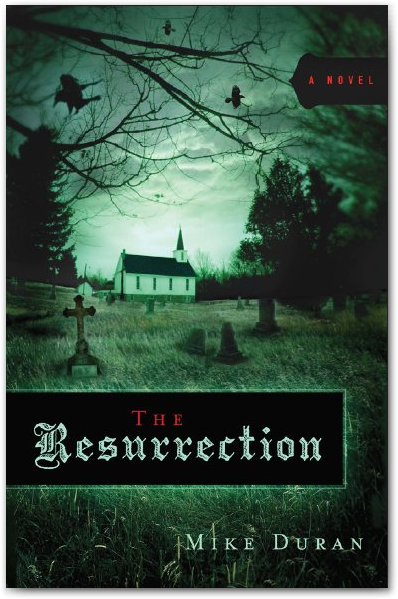
Today, we'll finish with some thoughts on speech patterns, and a list of line-editing comments.
MINOR SPOILERS ALERT: Read and enjoy the book first, then see if you agree:
Mid-Altitude issues (continued):
3) Character speech patterns: Mike chooses to employ a fair number of phonetic spellings throughout the novel ("lottsa," "ya know..." "shoulda..."). I would counsel him to consider using fewer, for two reasons:
a) The sheer number of repetitions became a bit distracting, for me. Dialogue that attempts to render dialect into black and white is simply harder to read, and my preference is to see it used sparingly, for particular effect. A little goes a long way, which leads to the second, related reason...
b) Almost every character in the book, with the exception of Keen, uses phonetically-spelled dialogue, at least on occasion. Consequently, the speech patterns aren't as effective as they could be as a means of differentiating characters.
Speech patterns are a wonderfully nuanced way to Show, not Tell. Mike nails this perfectly with Keen: even when agitated, Keen's speech is laced with sophisticated diction and syntax, delivered in a pedantic tone that instantly communicates this man's arrogance...the smug superiority he exudes through displaying his knowledge and philosophy. You don't have to tell us what Keen is like, we intuit it naturally, like we do in the real world, from the way he speaks.
But language used by the other characters rarely differentiates them as individuals, with varying personalities, backgrounds, and educational levels. The most noticeable and distressing example, I believe, comes from the character of Beeko.
Beeko is a physician from Nigeria, who grew up outside of Bwari, and speaks with a slight, but unmistakable British accent. From this description, and subsequent events, I infer a few things: a) English is his second language; b) at the very least, he was educated in British schools, and very likely his college years were spent in the class-conscious environment of England itself; c) he is a learned man, and d) Clark specifically seeks out Beeko because he values the doctor as a man of rational thought.
Assuming these things as given, that leads me to expect a certain language style from the character. Perhaps not an arrogant one, as with Keen, but speech patterns that are precise and formal (as with many English-as-a-second-language students), and erudite (throwing in words that even the seminary-trained Clark may be unfamiliar with). Beeko is a product of the British educational system and culture, where speech patterns and accents are badges of social standing.
And, in fact, for the first three or four statements I find what I expected. Then, Beeko unexpectedly turns a corner, and tosses out the very informal term, "critter." From that point on, through the remainder of the conversation he bounces back and forth between the formal ("I'm not daft enough to guess..." "A bit of a doubting Thomas, are we?" "The atmosphere is a manifestation of cumulative events or a series of historic concessions;") and the colloquial ("evangelism jazz" "Lotsa places..." "Don't ya, man?")
As an editor, I would counsel Mike to either a) explain this schizophrenic language pattern in the narrative (is there a motivation for it somewhere in Beeko's past?) or b) revise the doctor's speech to something more fitting with his educational and professional status. Similarly, the book would benefit from more careful attention to the other character's dialogue tendencies, as well.
Ground-level issues:
Finally, some micro-level observations...points at which I felt the line-editor missed a beat. These are the type of thing I look for when reading, because I think that training your eye to look for these makes you a better writer...and especially a better re-writer.
p45..."Well, let's say I'm getting closer. (missing punctuation, quotes not closed)
p64... shallow and erratic breathing... (why? from other indications, Jack is in a deep sleep, so you would expect slow, easy respiration)
p83...It was a black Hummer, the wide older models, with... (the Hummer is singular, "models" is plural... so better would be: It was a black Hummer, one of the wide older models,....)
p86... clear blue eyes and bright smile offset her aging features. (better with: clear blue eyes and a bright smile...)
p89... he snapped some surgical gloves on each hand ("some gloves" is plural, "hand" singular... better: he snapped a surgical glove on each hand....)
p142... got to wippin' people up. (Here, the phonetic spelling creates confusion...I think it means "whipping" people up.... but instead, it reads more like "wiping" people up. Better: Whippin' )
p165... the cabinets consisted of flat rollout trays, each one baring a typed insert... (unless the rollout trays are naked, they shouldn't be "baring" anything... they should be bearing labels)
p180/248.... on two occasions, characters say "Gentleman" (singular) when they mean "Gentlemen" (plural).
p208... "What do mean, Ruby?" (What do you mean, Ruby?)
p235... "Cool it! Both of you!" (Why is Vin yelling, and glaring, at both Jack and Rev Clark? Clark is standing still, not saying anything. Jack is the only aggressor, here)
p246... Echoes. Mike & his editors did a nice job avoiding those annoying echoes... unusual words and phrases that, when they are used twice or more, catch the attention. But here one slipped by: [tree] trunk thrust from the bowels of the earth.... (and then, two paragraphs later) a hawk burst from the bowels of the oak... ("bowels" is a word that you can go a long time without hearing in casual conversation, and here we see the phrase "bowels of..." twice in three paragraphs.)
p270...his delicate, breezy voice seemed to jive perfectly with his graceful demeanor. (Think the word we want here is jibe. To "jive" is to mislead, or pull someone's leg... to "jibe" is to be in agreement...to be in harmony.)
For years, I kept a notebook filled with observations like these...culled from a wide range of novels. It's invaluable practice at helping you build your revision skills...Something every writer should strive to improve.
Again, I hope you'll make room on your reading list for this one. I look forward to watching the progression of Mike's writing career.
Subscribe to:
Posts (Atom)